Building Tomorrow's Workforce: Inside Orange County's Push to Teach Tech Skills in Public Schools
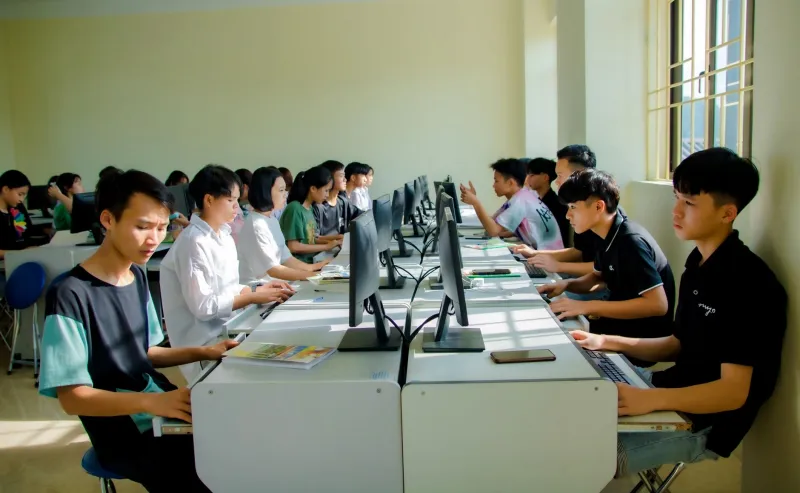
On a Tuesday morning at a public high school in Anaheim, a group of tenth-graders is not memorizing vocabulary lists or solving geometry proofs. Instead, they are debugging Python scripts, collaborating over shared screens, and discussing what it means to write code that is accessible to users with disabilities. Their teacher, a former software developer who left the private sector to join the classroom, calls the lesson "empathy-driven engineering."
This scene, once rare in Southern California public schools, is becoming more common across Orange County — though the pace of change varies dramatically depending on which district a student happens to attend.
A Region Betting on Digital Literacy
Orange County is home to a significant concentration of technology employers, from aerospace firms in Irvine to health-tech startups in Costa Mesa. Local workforce development organizations have long signaled that the region faces a persistent talent gap in fields requiring digital fluency. School districts have taken notice.
Several districts — including Irvine Unified, Santa Ana Unified, and Anaheim Union High School District — have expanded computer science course offerings over the past four years. Some have introduced dedicated pathways in cybersecurity, data analytics, and software development that allow students to earn industry-recognized credentials before graduation. Anaheim Union, in particular, has partnered with community colleges and private employers to develop a career technical education track that connects high school coursework directly to internship and apprenticeship opportunities.
"We are not just teaching kids to use technology," explained one district administrator involved in curriculum development. "We are teaching them to understand it, question it, and build with it. That is a very different goal."
Where the Gaps Remain
Despite genuine momentum, educators and researchers point to persistent inequities. Access to rigorous computer science instruction is not uniform. In wealthier communities, schools may offer multiple advanced courses, robust equipment, and dedicated instructional coaches. In lower-income areas, a single elective — often taught by a generalist teacher with limited technical training — may represent the entirety of a student's formal digital education.
Teacher recruitment and retention compounds the problem. Qualified computer science instructors can command salaries in the private sector that public school systems struggle to match. Several districts have reported difficulty filling open positions, sometimes relying on long-term substitutes or combining classes in ways that reduce instructional quality.
Bandwidth and device access, while improved following pandemic-era investments, remain concerns in some households. Students who lack reliable home internet connections face obvious disadvantages when coursework requires out-of-school practice and project work.
Partnerships Filling the Void
A number of nonprofit organizations and private-sector partners have stepped in to supplement what schools can provide on their own. Code.org, national coding nonprofits, and local technology companies have sponsored after-school programs, teacher professional development workshops, and equipment donations across the county.
One particularly notable collaboration involves a consortium of Orange County employers who have agreed to host job-shadow experiences and project-based mentorships for students enrolled in district tech pathways. Participating students describe the exposure as transformative.
"I had never actually been inside a real office where people were writing code for a living," said one junior from a Santa Ana high school who participated in a mentorship program last year. "It made everything feel real. Like, this is actually a job I could do."
Community colleges — particularly Irvine Valley College, Saddleback College, and Cypress College — also play a bridging role, offering dual enrollment options that allow motivated high school students to earn transferable college credit in technical subjects while still completing their secondary education.
What Parents Should Understand
Educators and counselors consistently emphasize that parental engagement is one of the most influential factors in whether a student pursues a technology-related pathway. Yet many parents, particularly those who did not grow up with significant digital exposure themselves, feel uncertain about how to support their children's interest in tech.
School counselors recommend that families ask specific questions at back-to-school nights and parent-teacher conferences: Does this school offer computer science as a standalone course, or only as part of another subject? Are there career technical education pathways available? What industry certifications can students earn before graduation?
Beyond formal coursework, parents are encouraged to normalize conversations about technology at home — not just about screen time and safety, but about how digital tools work, who builds them, and what kinds of problems they can solve.
The Road Ahead
Orange County school districts face real constraints — budget pressures, teacher shortages, and competing curricular demands — but the direction of travel is clear. Digital literacy is no longer considered a supplementary skill. It is increasingly treated as foundational, on par with reading and mathematics, for students who will enter a labor market reshaped by automation, artificial intelligence, and networked commerce.
The challenge for policymakers and community stakeholders is ensuring that this shift benefits all students, not only those fortunate enough to attend well-resourced schools. Closing the instructional gap will require sustained investment, creative partnerships, and a genuine commitment to equity — values that Orange County's civic institutions are being called upon to demonstrate.
For families seeking more information about digital education programs in their district, OC Web maintains a community resource directory linking to district technology pathways, local coding programs, and career technical education opportunities across the county.